In the south of the American continent, between south-central Chile and Argentina, live the Mapuche people, whose name means «people of the land». Their historical territory, called Wallmapu, stretches from the Pacific valleys to Patagonia. The Mapuche long resisted both the Inca and the Spanish, and their religious tradition is still alive today. The central figure of this tradition is the machi, the specialist in the relationship with the spiritual world.
Who the machi is
The machi is the person who, in Mapuche communities, intercedes with the spiritual powers, leads ceremonies, interprets dreams and seeks to restore balance when a person or family goes through a time of misfortune. In the great majority of cases machi today are women, although there are male machi, often with a gender identity expressed in a particular way during the rite.
The Mapuche concept of well-being is broad: it includes the body, the mind, and relations with family, community, ancestors and territory. This is why the machi does not work only on the person, but on the whole web of relationships in which the person lives. She also knows the plants of the territory and their ritual meaning, keeping a knowledge handed down for generations.
The calling
Becoming a machi is not a career choice. According to tradition, a person is called by the spirits, often through persistent dreams, visions or a long period of distress that only accepting the calling can resolve. Many machi say they resisted the call before embracing it.
There follows a period of apprenticeship with an older machi and finally an initiation ceremony, during which the new machi's rewe is raised for the first time.
The rewe, a ladder to the sky
The rewe is a trunk carved with a series of steps, planted in front of the machi's house. It is the most visible symbol of her role. During ceremonies the machi climbs the steps of the rewe and from there comes into contact with the powers of the upper world.
The rewe is often surrounded by branches of sacred plants, such as the canelo (foye), a tree held sacred by the Mapuche, and by coloured flags. The number of steps and the shape of the figure carved at the top vary. It works as an axis of the world: a point where earth and sky touch, similar in function to the cosmic tree of many shamanic traditions.
The kultrun, the cosmos in a drum
The machi's most important instrument is the kultrun, a bowl-shaped drum carved from a single piece of wood and closed with a stretched hide. Before closing it, the machi places small objects inside and breathes her own words into it: the drum thus becomes part of her.
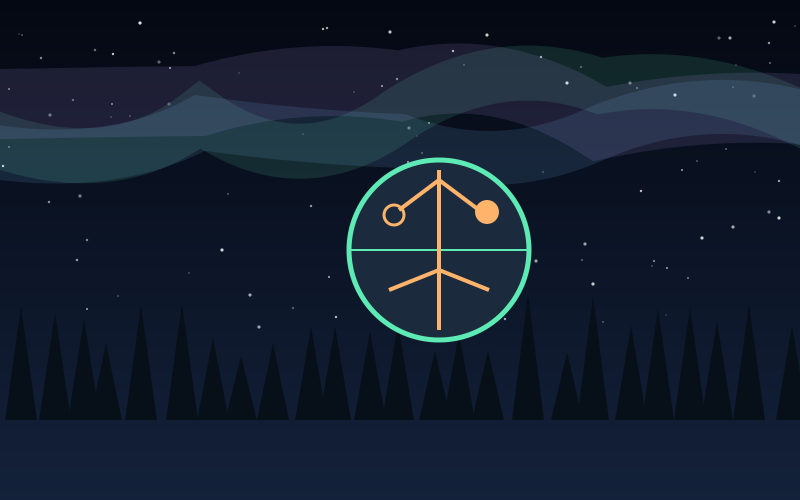
On the hide is painted a figure representing the Mapuche cosmos. Two crossing lines divide the surface into four parts, corresponding to the four directions, the seasons or the four great powers. At the sides appear symbols of the sun, the moon or the stars. The sound of the kultrun accompanies the songs and allows the machi to enter the state needed to communicate with the spirits.
The design of the kultrun has become a symbol of Mapuche identity and also appears on the Mapuche flag adopted at the end of the twentieth century.
The ngillatun, the great communal ceremony
Alongside rites dedicated to individuals, the Mapuche calendar includes a great communal ceremony: the ngillatun. It is a collective prayer for the fertility of the land, a good harvest, rain and the well-being of the whole group. It can last several days and brings several communities together.
The ngillatun takes place in a ceremonial field with a central altar, often a rewe or a cluster of branches, around which families arrange themselves in a semicircle facing east. There are prayers, offerings of food and drink, animal sacrifices according to local tradition, and dances accompanied by instruments such as the kultrun and the long trutruka trumpet. In many communities the ngillatun is led by a traditional authority, the ngenpin, with the participation of the machi.
A tradition in defence of the land
For the Mapuche the sacred is inseparable from the land. Rivers, volcanoes, forests and specific places are inhabited by guardian spirits, the ngen. This is why defending the tradition is today intertwined with defending the territory, and many machi are reference figures for their people not only in religion but also in culture.
In short
- The machi is the Mapuche ritual specialist, today mostly a woman.
- One becomes a machi through the call of the spirits, often after dreams and a long trial.
- The rewe is a stepped pole joining earth and sky, planted in front of the machi's house.
- The kultrun is a drum painted with a map of the cosmos, now a symbol of Mapuche identity.
- The ngillatun is the great collective prayer for the fertility and well-being of the community.